Integrating and transcribing audio files
There are several ways to incorporate information from external sources into a chat. One option is to use knowledge bases. Another is to use websites or documents. This process is already described in a separate manual entry.
Feature overviewFeature overview
Uploading an audio file to a chat
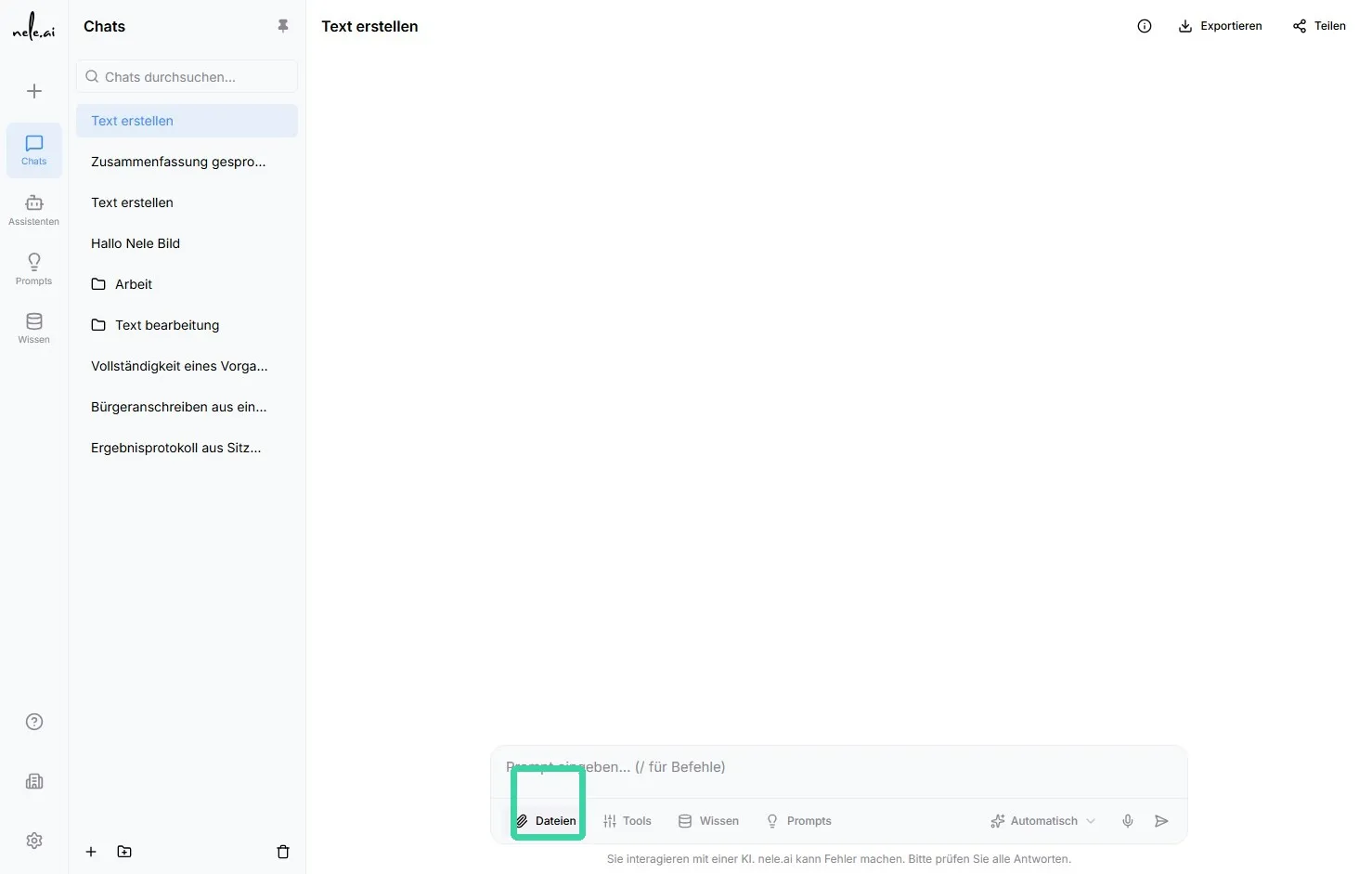
First, open the chat where you want to use the audio file. The file will then be attached to your message as an additional element and processed together with your prompt.
Add audio file
- Click the in the chat input areapaperclip icon.
- In the menu that opens, selectUpload files, images, or audio.
- Select the desired audio file from your computer or mobile device.
- Confirm your file selection.
Requirements and limitations
Note on file size
A single audio file must be no larger than 500 MB and have a maximum length of 300 minutes.
Important
If clicking the paperclip icon only shows the option "Upload files or images," the audio feature is not enabled for your account. In this case, please contact your administrator.*
Check uploaded file and formulate request
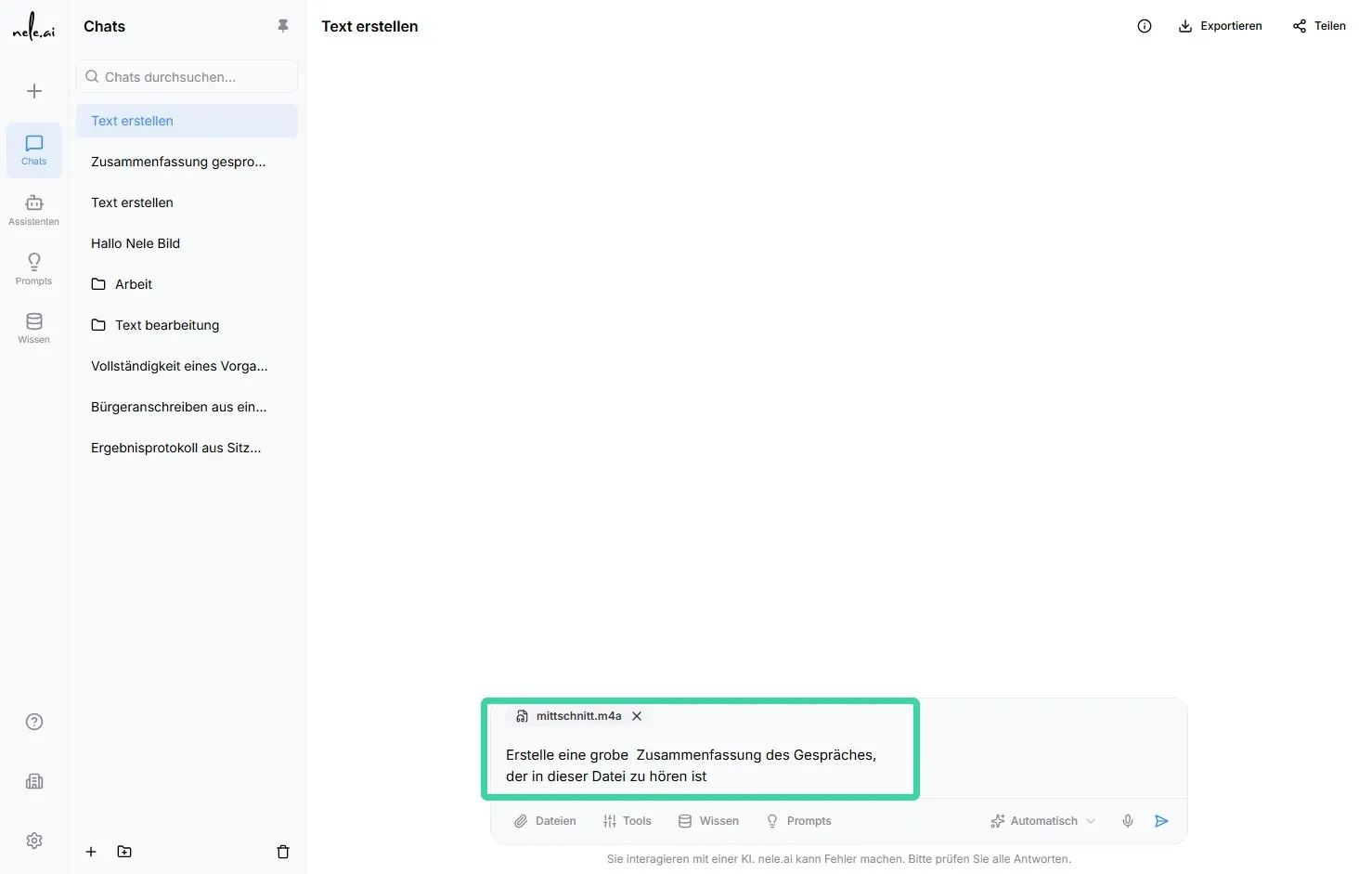
Once uploaded, the audio file will appear in the chat input area. Before sending, verify that the correct file is attached. Then, formulate your request for the AI and send the message.
Send request to the AI
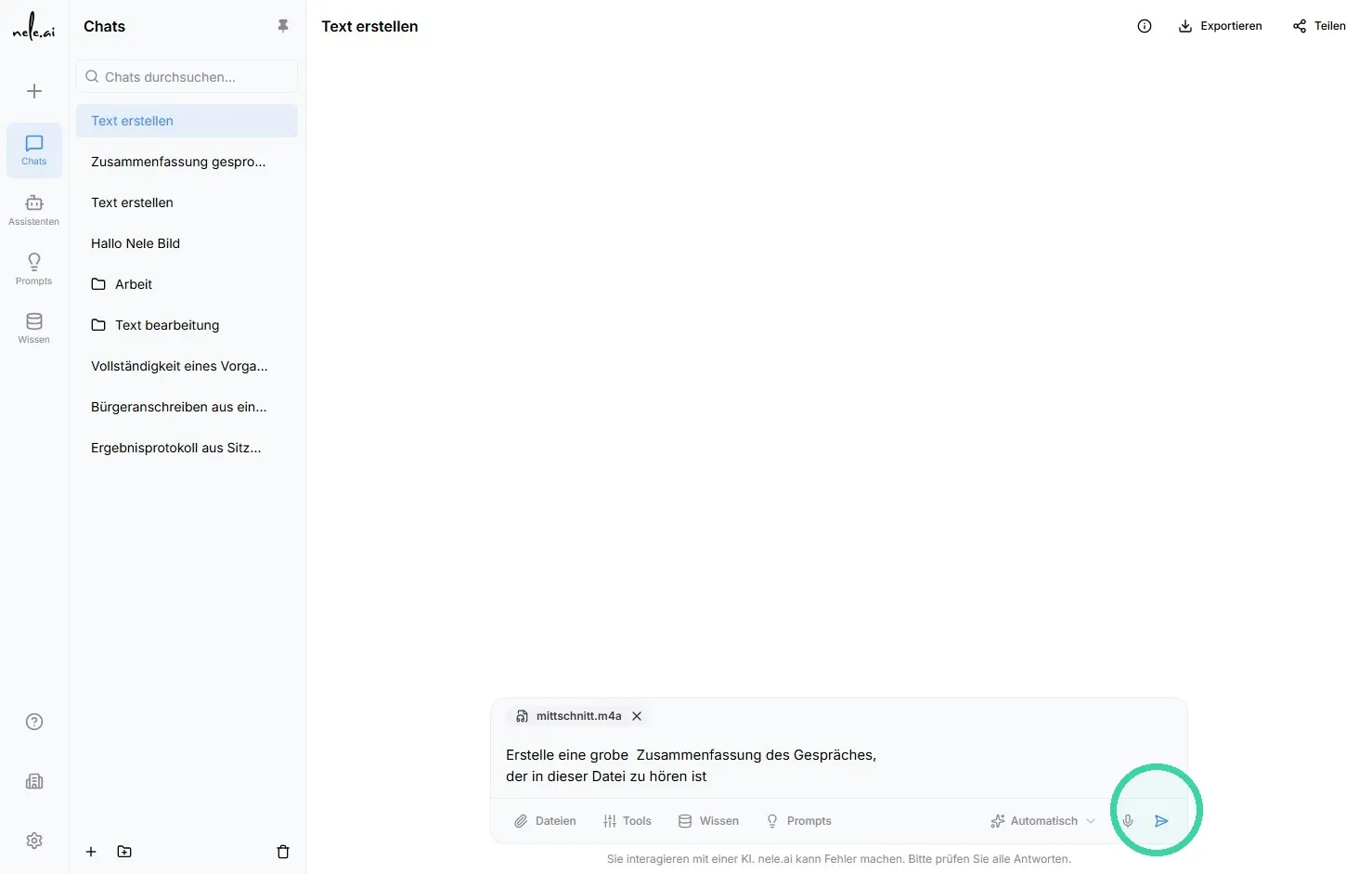
- Check that the desired audio file is listed in the chat input area.
- Enter your instructions into the text input field.
- Click on"Send".
Be as specific as possible about the result you need. This helps the AI analyze the audio file more effectively.
Examples of effective prompts
For example: "Create a brief summary of the key findings from this meeting."
For example: "Transcribe the audio file and structure the content by topic."
For example: "List all mentioned tasks, responsibilities, and deadlines."
For example: "Create a clear summary of the conversation, including decisions made and open action items."
Access transcript and file information
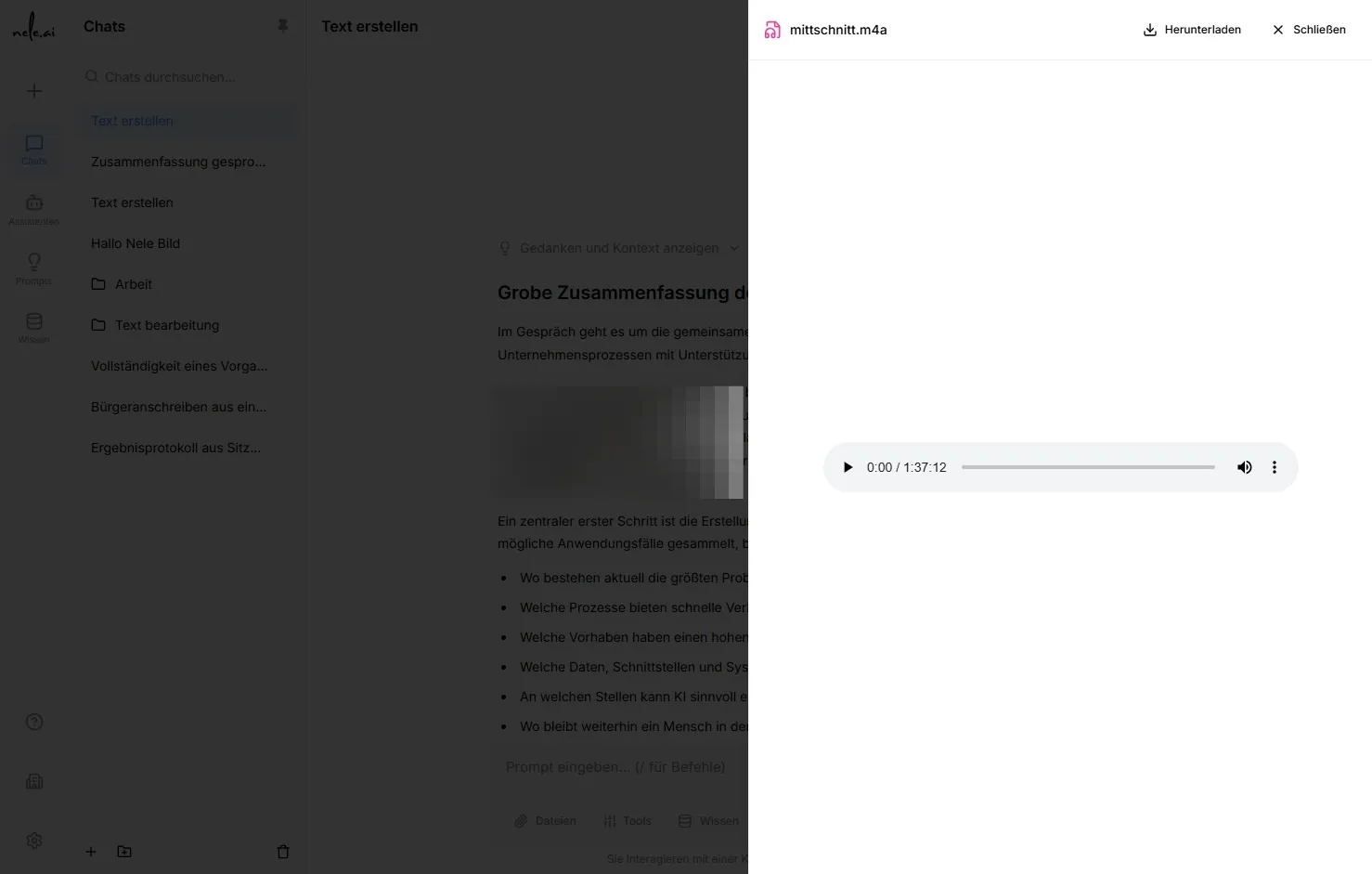
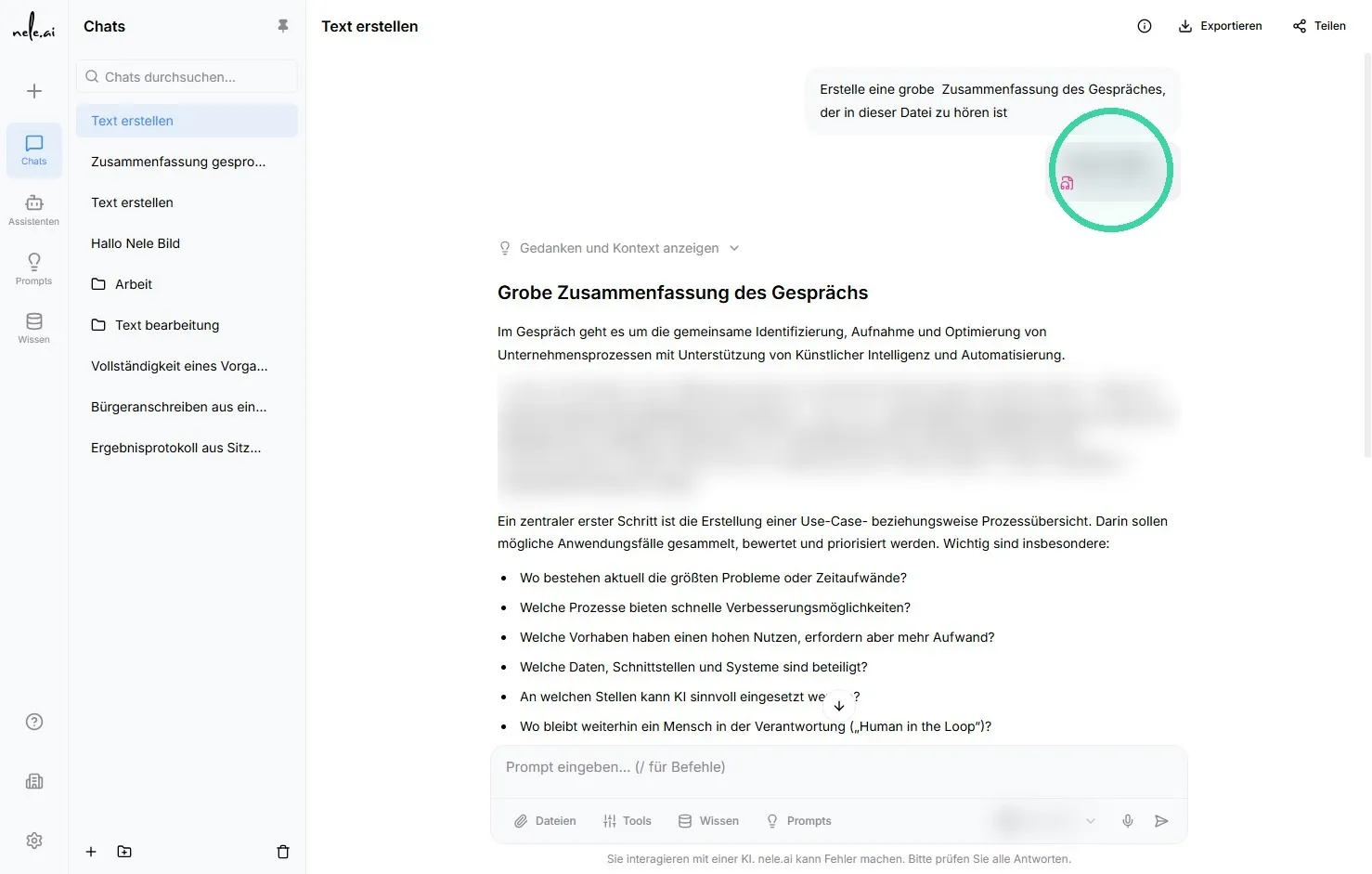
After sending, the attached audio file remains visible in the chat history. You can access additional information and the generated transcript via the file.
- Click on the uploaded audio file in the chat history.
- Open the file's detail view.
Editing attached audio files later
You can also edit or delete messages with attached files after they have been sent. To do this, hover your mouse cursor over the relevant message in the chat history and click the pencil icon.
You can then, for example:
- revise the request,
- remove the attached audio file,
- add further elements or
- resend the message.
Note
After making changes to a message, always check that the correct files are attached and that your instruction still leads to the desired result.
Impact on token volume
Attached audio files, documents, images, and websites consume the available token volume of a chat. Tokens are processing units that AI models use to capture and process text and other content.
As a rough guide, 1,000 tokens correspond to approximately 750 words. The actual amount available depends on the AI model being used.
Impact of large files
Long audio files and extensive transcripts can consume a large portion of the available context. As a result, the AI may no longer be able to fully account for earlier content in very long chats.
Important note
For long recordings, use specific instructions whenever possible and split very extensive content across multiple messages or chats if needed.*
Supported audio formats
nele.ai currently supports the following audio formats:
Supported file types
- AAC
- FLAC
- MP3
- MP4
- MPEG
- MPGA
- M4A
- OGG
- WAV
- WEBM
Tips for best results
Recording quality
A clear recording with minimal background noise improves transcript quality. Whenever possible, ensure clear speech, low background noise, and sufficient volume.
Precise instructions
Clearly describe what you want the AI to do with the recording. Instead of a general request like “Process this file,” you will generally achieve better results with a specific instruction such as “Summarize the decisions made and list the people responsible for each.”
Verify content before use
Important note
AI-generated transcripts, summaries, and analyses may contain errors. Please carefully verify names, numbers, dates, responsibilities, and technical information before further use.*